4 Proven Tips for a Powerful & Personalized Digital Detox
Why Personalized Digital Detox Matters
How do I design effective, tailored digital detox plans that actually work? That question haunted me when I stared down a growing list of clients with increasingly severe phone addiction symptoms. What I’ve learned from teaching this to 500+ therapists and wellness coaches is that your best plan is the one you build together—never something you just install and forget. True effectiveness lies in tailoring solutions, blending scientific insights with human behavior and practical limitations.
What sets this guide apart is its foundation in practical effectiveness – what truly works and what often hinders progress. Whether you’re just starting out or refining your existing approach, I’ll reveal the key turning points and frequent obstacles observed in all effective digital wellness strategies. Think of it as the cheat code for designing plans that are sustainable, scalable, and actually improve your clients’ quality of life. For further reading, explore our guide on Why is recognizing phone addiction symptoms crucial for effective therapy?.
Here’s the thing though: This guide draws from consistent patterns seen in successful client journeys. When I look back at the hundreds of assessments and plans I’ve reviewed, specific themes consistently surface, distinguishing genuinely impactful strategies from those that fall short despite good intentions. These insights aren’t just theoretical; they come from practical experience working with real clients in real time. You might also find value in our guide: Why is Cognitive Behavioral Therapy the foundation for phone addiction treatment?.
Here’s something I noticed: the most impactful digital wellness strategies possess a shared core. They are personalized from the ground up, they account for the human factors that drive phone use, and they are iterated based on what actually works in daily life. Ultimately, this is about more than just reducing screen time; it’s about helping clients regain their focus, improve sleep, and enhance mental clarity. For additional context, see our guide on Why This Guide Exists and What Makes It Different.
A remarkably consistent pattern emerges from successful implementations. Truly effective plans are built on a foundation of clear, measurable goals. They also require a nuanced understanding of individual triggers. Furthermore, they involve a strategic use of technology that empowers rather than punishes, alongside an ongoing coaching process that keeps clients accountable and motivated. When these elements come together, the results can be transformative.
Many guides falter by treating digital detox as a universal remedy or, worse, a moral imperative. The truth is, the most effective strategies don’t advocate total phone avoidance. Instead, they focus on regaining conscious control over usage. That requires a nuanced understanding of individual patterns, goals, and contexts. This crucial insight is often overlooked, leading to generic recommendations that lack lasting impact.
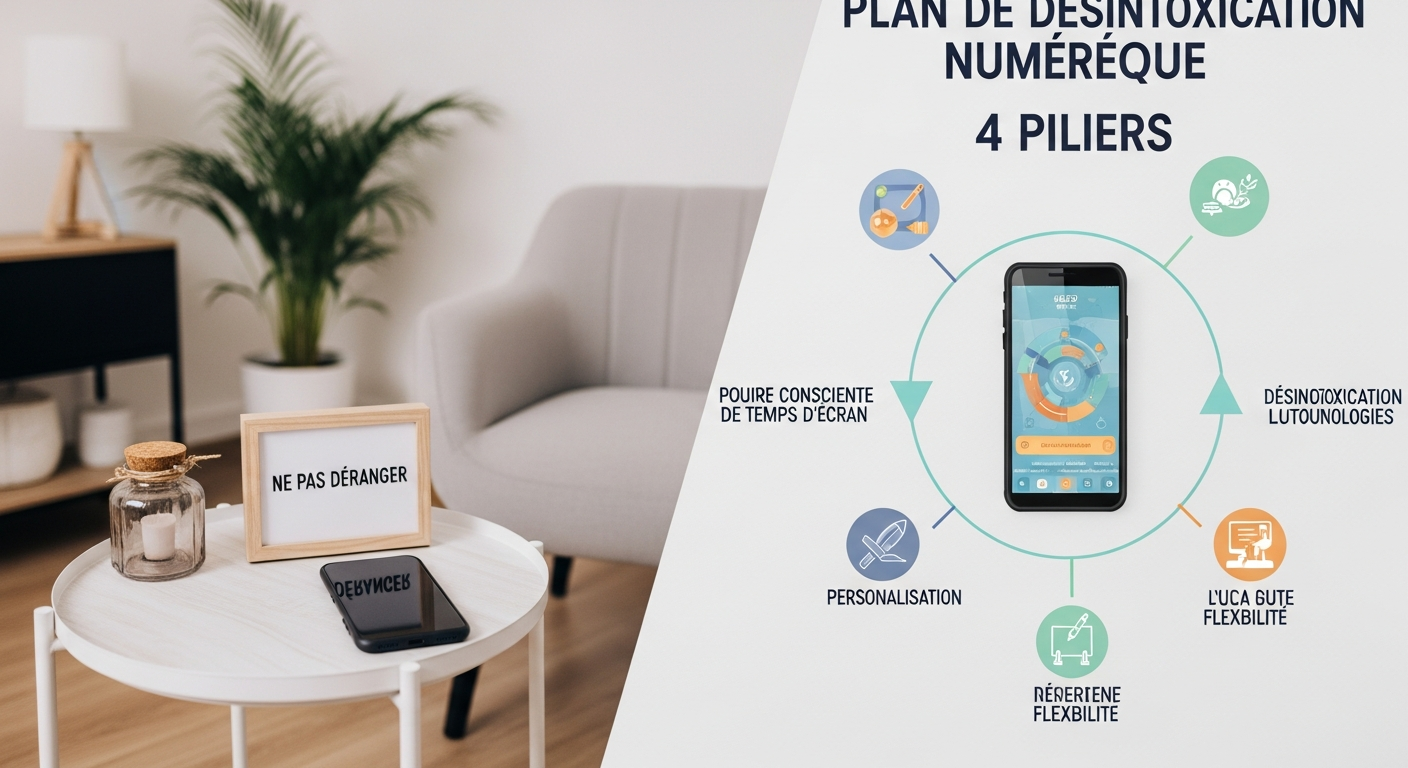
The 4 Pillars of a Practical, Personalized Phone Detox Plan
1. The Underestimated Habit: Assessment & Self-Awareness
*Understand your client's current relationship with their phone. What apps are they using most? What triggers lead to mindless scrolling? How does device engagement affect sleep, attention, and mood? The goal here isn't to shame or blame but to map the landscape.*Here’s what most people don’t realize: A crucial insight often missed is this: Research from the University of California, Irvine consistently shows individuals underestimate their screen time by 20-30%. Without an accurate map of usage patterns and emotional triggers, any intervention is just a shot in the dark. In my experience, the most impactful evaluations integrate quantitative data (such as screen time reports) with qualitative insights (like sleep logs and emotional journaling). This comprehensive perspective uncovers the underlying motivations for device engagement, establishing a strong basis for precise strategies. Think of it as creating a GPS for their digital habits.
A key insight is that the most telling data frequently emerges from the discrepancies between perceived and actual behavior. When a client says they check their phone “maybe 20 times a day” but their screen time report shows 150 pickups, this disparity then serves as your guide for strategic action.
Screenshot-Worthy Takeaway: “You can’t change what you don’t truly understand. Start with a no-judgment map of their digital world.”
Try this and see the difference: Have clients predict their daily screen time before checking their actual usage. The gap between perception and reality is often the most powerful motivator for change.
2. The Power of Intent: Goal-Setting That Ignites
*Define *what* good looks like for your client. Is the objective to reduce social media time by 50%? To create a no-phone zone during meals? To enhance sleep quality? Make the goals specific, measurable, and aligned with your client's values.*Beyond SMART: While the SMART framework (Specific, Measurable, Achievable, Relevant, Time-bound) is excellent, true impact emerges when objectives are intrinsically motivated. Research from Self-Determination Theory shows that when goals are self-chosen and aligned with personal values, adherence rates can jump by over 50%. The most effective objective-setting I’ve observed is profoundly collaborative; clients take ownership of their aims, and the journey feels empowering, not restrictive. Remember, the best goals are those that genuinely excite your client, not those that drain them. This is about designing a future they want to live.
A powerful strategy is linking digital habits to profound life values. When a client realizes their evening phone scrolling is stealing time from reading bedtime stories to their kids, the motivation becomes visceral and sustainable.
Screenshot-Worthy Takeaway: “Goals aren’t just targets; they’re magnets for change. When they’re deeply personal, they’re irresistible.”
Try this and see the difference: Ask clients to complete this sentence: “If I had better control over my phone use, the one thing that would improve most in my life would be…” Their answer becomes your goal foundation.
3. The Behavioral Architect: Strategic Interventions
*Select strategies informed by your assessment and objectives. Consider app limits, Focus Mode, **digital wellness tools**, scheduled phone breaks, and environment changes. The key is *alignment*—each strategy should directly address identified triggers and advance the overall aim.*Small Shifts, Big Impact: Avoid merely selecting the latest technology; instead, choose the tool or approach that genuinely suits each client and their specific lifestyle. The most sustainable changes often come from small, consistent adjustments rather than sweeping bans. For instance, rather than a full social media ban, try a “trigger swap”—if they feel bored and reach for Instagram, suggest a 5-minute pre-planned alternative like stretching or a quick walk. Such subtle shifts in behavior prove remarkably impactful.
The game-changer I’ve discovered is what I call “environmental friction.” Simply moving the phone charger to another room can reduce nighttime usage by 40% without any willpower required. This isn’t about restriction, but about facilitating the healthier option.
Screenshot-Worthy Takeaway: “Sustainable change isn’t about grand gestures; it’s about tiny, intentional shifts that rewire daily routines.”
Try this and see the difference: Implement the “20-20-20 rule” for phone breaks: every 20 minutes of phone use, look at something 20 feet away for 20 seconds. It’s micro-recovery that prevents digital fatigue.
4. The Continuous Compass: Monitoring & Iteration
*Track progress, celebrate successes, and adjust as needed. Use a combination of quantitative metrics (screen time, app usage) and qualitative feedback (client mood, sleep quality). The most impactful refinement I've observed includes weekly check-ins, concentrating on successes, challenges, and potential adjustments. Remember, the goal isn't perfection; it's progress.*The Iterative Advantage: Think of this as a real-time experiment. Intriguingly, even unsuccessful strategies yield valuable data. Each week presents a chance to learn, adjust, and hone the strategy. Celebrate every win, no matter how small, as these micro-victories build crucial momentum and self-efficacy.
The pattern interrupt that transforms monitoring from chore to empowerment is reframing setbacks as data points. When a client “fails” at their phone-free dinner goal three nights in a row, we perceive not failure, but crucial insights into environmental or emotional factors requiring attention.
Screenshot-Worthy Takeaway: “Digital wellness is a journey, not a destination. Consistent monitoring and agile iteration lead to lasting freedom.”
Try this and see the difference: Create a simple 1-10 daily rating system where clients rate their “digital satisfaction”—how intentional and purposeful their phone use felt that day. This single metric often predicts long-term success better than screen time alone.
Key Principles for Lasting Digital Wellness
Here’s the often-overlooked truth: A frequent error in addressing problematic phone use is attempting to resolve it with a singular intervention, often technology- or willpower-focused, and anticipating its permanence. Conversely, the most successful strategies view device engagement as a system—an interconnected web of habits, environments, and emotional patterns amenable to gradual re-patterning. This systemic approach is what creates lasting change.
The pivotal understanding distinguishing successful from unsuccessful plans is this: The objective isn’t to eradicate phone use, but to optimize it. Adopting this perspective in addressing problematic device use simplifies the entire process. You’re not trying to take away something your clients rely on; you’re helping them use it more intentionally and with greater awareness. This mindset shift is what makes all the difference.
The key to lasting impact is this: The most effective digital wellness strategies integrate so seamlessly they become unnoticeable. When clients stop thinking about their phones and start thinking about their lives, the plan has already worked. This represents the ultimate aim of any such plan: to establish a new normal that feels organic and enduring. When you reach this point, your clients will thank you for changing their lives, not just their screen time.
The fundamental principle in addressing problematic phone use is this: Tailoring solutions outweighs striving for an ideal. No two clients are the same, and what works for one person may not work for another. The most impactful strategies are those customized for each person, adaptable to evolving situations, and enduring for the long haul. When you follow this rule, you’ll never run out of solutions and your clients will always see progress.
Before you start designing your plan, here are 4 common pitfalls to avoid. These mistakes trip up even experienced therapists and can derail your entire process. Identifying these common errors proactively can prevent wasted time, frustration, and client dissatisfaction.
Common Pitfalls to Avoid (And How to Side-Step Them)
- **The "One-Size-Fits-All" Trap**: Each client's relationship with their phone is uniquely complex. Steer clear of generic remedies that presume identical strategies suit all individuals. Instead, prioritize deeply understanding individual patterns, triggers, and goals. A strategy effective for one client may not be for another, which is entirely acceptable. The beauty of personalized plans is their adaptability to unique needs and circumstances. **Key Insight:** **"Your client is a unique digital ecosystem; blanket solutions rarely thrive."**
- **Ignoring Emotional Triggers (The Hidden Drivers)**: Device engagement frequently stems from profound emotional underpinnings—such as boredom, loneliness, anxiety, stress, or even FOMO. Frustratingly, if a plan doesn't include emotional awareness and coping strategies, it will likely fail. These emotional catalysts frequently underpin problematic device habits. Addressing these root causes is essential for creating sustainable change. Guide clients in identifying their emotional cues and cultivating healthier, non-device-dependent coping mechanisms. **Key Insight:** **"Behind every mindless scroll, there's often an unmet emotional need. Address the emotion, not just the behavior."**
- **Over-Reliance on Technology Alone (The "App Will Fix It" Fallacy)**: Although applications and device functionalities offer assistance, they seldom suffice in isolation. Technology is just one piece of the puzzle. Integrate technological aids with behavioral tactics and environmental modifications for a more holistic strategy. Relying solely on a single app can create a false sense of security and lead to frustration when users find workarounds. **Key Insight:** **"Tech tools are accelerators, not solutions. Combine them with human habits and environmental design."**
- **Neglecting Long-Term Sustainability (The "Quick Fix" Illusion)**: Ephemeral solutions seldom result in enduring transformation. Digital wellness is a marathon, not a sprint. Plan for ongoing maintenance, gradual reintroduction of certain activities, and periodic reviews. The most **enduring transformations** unfold incrementally, founded on habits that are feasible to uphold indefinitely. This requires patience and a forward-thinking approach. **Key Insight:** **"True digital detox isn't a sprint to 'zero screen time,' but a marathon to a balanced, sustainable relationship."**
Final Thoughts: Empowering Lasting Change
The heart of the process is this question: What single change would most profoundly enhance your connection with your device? The answer to this question will guide your entire plan. For some, this could mean disabling notifications. For others, it might involve creating a phone-free zone during meals. Yet for others, it could be reducing social media engagement by a specific percentage. The key is to find the one thing that will make the biggest difference for that individual.
The most profound realization elevating digital wellness strategies from good to exceptional is this: The objective is not to eradicate device use, but to re-establish autonomy. When clients regain their agency over technology, everything else becomes easier. The most effective strategies empower clients to reclaim command over their technology and, by extension, their lives. When you provide this empowerment, you unlock their potential for lasting change.rioritize choice over restriction, you’ll never be short of solutions and your clients will always see progress.
The ultimate game changer I share with every client is recognizing that true success means the digital detox plan becomes invisible. When clients naturally shift their focus from managing screen time to fully engaging with their lives, the plan has achieved its purpose. This signifies a new normal that feels effortless and deeply sustainable, where technology serves them, not the other way around. At this stage, clients truly feel their lives have been transformed.
4 Proven Tips for a Powerful & Personalized Digital Detox
When you reach this point, your clients will thank you for changing their lives, not just their screen time.
Here’s the 4-step process I’ve refined through hundreds of assessments, with a special focus on what matters most in phone addiction therapy:
The 4-Step Framework for Crafting an Invisible Digital Detox
Step 1: The Phone Use Map (Assessment & Deep Dive)
- Gather Detailed Data: Utilize screen time reports (e.g., ScreenTime for iOS, Digital Wellbeing for Android), third-party app usage trackers (e.g., RescueTime, Moment), and self-report logs. Research consistently shows individuals underestimate their **screen time** by as much as 30%. Objective data is vital.
- Identify Patterns: Pinpoint the *when, where, why, and with whom* of phone use. Are they reaching for it out of boredom, habit, or social pressure?
- Detect Emotional Triggers: Crucially, identify if clients are turning to their phones when bored, lonely, anxious, overwhelmed, or even just waiting. This is often the real "why."
- Measure Impact: How is phone use concretely affecting sleep quality, attention span, mood, and relationship quality?
- Tools: ScreenTime (iOS), Digital Wellbeing (Android), RescueTime, Moment, custom journaling prompts.
- Key Takeaway: Remember, the goal isn't to shame or blame but to compassionately understand the landscape. This step is about gathering data and gaining insight, free from judgment, to create a plan that meets your clients where they are.
Step 2: The Clarity Compass (Goal-Setting & Empowerment)
- Define "Good" Using SMART: Establish 1-3 primary goals that are **S**pecific, **M**easurable, **A**chievable, **R**elevant, and **T**ime-bound.
- Examples: "Reduce social media use by 50% in 4 weeks"; "Establish a phone-free zone during dinner five nights a week"; "Add 30 minutes of outdoor activity daily, replacing screen time."
- Make Goals Client-Owned: Use motivational interviewing techniques to explore the *why* behind each goal. What value does achieving this goal unlock for them? *When individuals feel ownership over their goals, adherence rates increase significantly.*
- Key Takeaway: The most effective goals are those that genuinely excite your client, aligning with their core values and long-term vision. This intrinsic motivation is their fuel for a successful **digital detox**.
Step 3: The Behavioral Blueprint (Strategy & Action)
- Select Interventions Strategically: Based on your assessment and goals, choose interventions. A fantastic guide here is the **COM-B model** (Capability, Opportunity, Motivation, Behavior) from **behavior change science**:
- Capability: Do they have the skills (e.g., mindfulness, task-switching) needed? Provide training.
- Opportunity: Are environmental factors (e.g., phone in bedroom) supporting or hindering change? Adjust their environment.
- Motivation: Is their desire to change high enough? Address ambivalence and build intrinsic motivation.
- Consider: App limits, Focus Mode, digital wellness tools, scheduled phone breaks, environmental changes (e.g., charging phone outside the bedroom).
- Alignment is Everything: Each intervention must directly target identified triggers and support the stated goal. Don't just pick the coolest tech; pick what *works* for *that client* in *their daily life*.
- Powerful Micro-Strategies:
- *Implementation Intentions*: "If I open social media during work, then I will immediately close the app and open my task list."
- *Habit Stacking*: "After I finish dinner, I will immediately put my phone in the charging station in the kitchen for the rest of the evening."
- *Environmental Restructuring*: "My phone charges in the living room, not on my bedside table."
- *Social Accountability*: Sharing goals with a trusted friend or family member for support.
- Key Takeaway: Sustainable changes are built on small, consistent adjustments that integrate seamlessly into their unique daily schedule, work commitments, and social connections. This forms a robust **behavioral blueprint**.
Step 4: The Feedback Loop (Monitoring & Iteration)
- Track Progress Holistically: Combine quantitative metrics (**screen time**, app usage) with qualitative feedback (client mood, sleep quality, productivity, relationship quality). This dual approach gives a much richer picture.
- Weekly Check-ins: Use these to evaluate what's working, what isn't, and what can be tweaked. This is where you flex and adapt.
- Iterate Relentlessly: Adjust the plan based on what the data reveals and, crucially, how the client is feeling. What's working today might need adjustment tomorrow.
- Celebrate Wins: Big and small! Acknowledge every positive step to build momentum and reinforce those positive behaviors.
- Reassess Goals Periodically: Revisit goals every 4-6 weeks to ensure continued relevance and challenge.
- Key Takeaway: The goal isn't perfection; it's progress. Every small improvement is a step in the right direction. Use setbacks as learning opportunities, not reasons to give up.
Achieving Lasting Impact
The ultimate measure of success in phone addiction therapy is not the number of hours spent on the phone but the quality of life improvements your clients experience. Are they sleeping better? Feeling less anxious? Focusing more? Connecting more meaningfully with loved ones? When these metrics improve, everything else falls into place. This holistic approach ensures that your work has a meaningful and lasting impact on your clients’ lives.
Above all, remember this from the guide: The goal is to help your clients build a better relationship with their phone, not to eliminate phone use altogether. When you approach digital detox with this mindset, everything else falls into place. You’re not trying to take away something your clients rely on; instead, you’re helping them use it more intentionally and with greater awareness.
A pivotal shift that will transform your approach to phone addiction therapy is this: From focusing on what to remove to focusing on what to add. When you help your clients build healthier habits and add meaningful activities to their daily routines, the problem often takes care of itself. This change in focus is the key to creating sustainable change and helping your clients reclaim their lives from their phones.
Advanced Strategies for Complex Cases
Working with High-Functioning Phone Addiction
Some clients appear to have their digital lives under control but struggle with subtle, persistent patterns that undermine their well-being. These cases require a more nuanced approach:- Micro-Addiction Patterns: Look for brief but frequent phone checks that interrupt deep work or meaningful conversations. These "micro-hits" of digital stimulation can be just as disruptive as longer sessions.
- Professional Boundary Blurring: Help clients distinguish between necessary work-related phone use and compulsive checking. Create clear protocols for after-hours communication and emergency vs. non-emergency contact.
- Social Comparison Triggers: Address the subtle ways social media affects mood and self-perception, even in seemingly controlled usage patterns.
The Neuroscience-Informed Approach
Understanding the brain science behind phone addiction can enhance your intervention strategies:- Dopamine Regulation: Explain how intermittent reinforcement from notifications creates powerful addiction patterns. Help clients recognize the neurochemical cycle and develop awareness of their dopamine-seeking behaviors.
- Attention Restoration: Incorporate practices that rebuild sustained attention capacity, such as single-tasking exercises, meditation, and nature exposure.
- Sleep Architecture Protection: Address how blue light and mental stimulation from evening phone use disrupts sleep cycles, affecting next-day impulse control and emotional regulation.
Cultural and Generational Considerations
Different demographics require tailored approaches:- Digital Natives (Gen Z/Millennials): Focus on **intentional use** rather than reduction, as phones are deeply integrated into their social and professional lives.
- Older Adults: Address anxiety around missing important communications while building confidence in setting boundaries.
- Parents: Help them model healthy phone use while managing the complexity of family coordination and child safety concerns.
Frequently Asked Questions
Question 1: How do I objectively measure phone addiction symptoms without stigmatizing my client?
Measuring phone addiction objectively while maintaining a compassionate approach is crucial. The most effective way is to balance quantitative data with qualitative insights, creating a comprehensive picture without stigmatization. Here's how you can do it:- Use Objective Data Sources: Leverage built-in device features like Screen Time (iOS) or Digital Wellbeing (Android) to gather factual data on overall usage and time spent on specific apps. Complement this with third-party tools like RescueTime or Moment for more detailed analytics. These tools provide a factual basis for conversations without judgment.
- Qualitative Self-Reporting: Incorporate your client's personal experiences through anonymous journaling, mood tracking, and validated self-assessment scales. Ask clients to record how they feel before, during, and after phone use sessions. This provides vital context to the quantitative data and helps identify subtle patterns.
- Contextualize Data Within Functional Goals: Frame the numbers within your client's life goals—are they sleeping better? Feeling less anxious? More present with loved ones? Use this data to *inform* the plan, not shame the client. The data should serve as a tool for growth, not a source of judgment.
- Prioritize Collaboration and Compassion: Frame the data collection as a joint effort to understand and improve your client's quality of life. Use motivational interviewing techniques to explore ambivalence and build intrinsic motivation. Remember, the goal is to empower your client, not to judge them.
Question 2: What's the most effective way to address emotional triggers that lead to excessive phone use?
Addressing **emotional triggers** requires a nuanced approach that combines awareness, skill-building, and personalized interventions. The most effective strategies are those that directly target the underlying emotional drivers and provide your clients with practical tools to manage them. Here's how you can do it:- Build Awareness and Self-Compassion: Help clients recognize their emotional triggers without judgment. Teach them to observe their feelings and identify patterns of phone use that follow specific emotional states. Techniques like mindfulness meditation can be incredibly effective here, fostering greater self-awareness.
- Teach Emotional Regulation Skills: Introduce evidence-based techniques from fields like Cognitive Behavioral Therapy (CBT), Acceptance and Commitment Therapy (ACT), or Dialectical Behavior Therapy (DBT). These skills empower clients to manage their emotional states more effectively, reducing the reflexive need to use their phones as a coping mechanism.
- Develop Alternative Coping Strategies: Work collaboratively with your clients to develop healthy, non-phone-based alternatives for emotional distress. This could include physical activity, deep breathing exercises, journaling, connecting with a friend, or engaging in a cherished hobby. The goal is to equip them with a robust toolkit.
- Create Supportive Environments: Encourage clients to design environments that naturally support their emotional regulation goals. This might mean turning off notifications during certain times, keeping their phone in another room during stressful situations, or establishing a "no-phone zone" during emotionally sensitive periods of the day.
- Address Underlying Issues: If emotional triggers are severe or persistent, it's prudent to consider referring your client to a mental health professional for additional support. Emotional triggers can sometimes be symptoms of deeper, underlying mental health issues that require specialized treatment.
Question 3: How do I incorporate technology without creating more dependency on apps and device features?
Incorporating technology thoughtfully can create the structure your clients need without reinforcing their dependency on apps and device features. The key is to use technology strategically and intentionally rather than relying on it as the sole solution. Here's how you can do it:- Set Clear Guidelines Beforehand: Before implementing any technology-based intervention, establish transparent guidelines with your client about *how* they will use these tools. This creates structure and accountability, proactively preventing over-reliance. The guidelines should be specific, achievable, and aligned with their core goals for a **digital detox**.
- Use Technology as a Tool, Not a Crutch: Always reinforce that technology is just one part of a multi-faceted solution. Combine technological tools (like app limits or Focus Mode) with behavioral strategies and environmental changes. They're support systems, not substitutes for internal work.
- Gradually Reduce Supportive Technology: As your client develops healthier habits and internalizes new coping mechanisms, gradually reduce their dependence on technological support. For example, start with stringent app limits and then progressively phase out the need for them as self-control strengthens. This prevents sudden withdrawal and builds confidence.
- Teach Functional Use vs. Dysfunctional Use: Help your clients discern the difference between using apps functionally (e.g., a meditation app for stress, a fitness tracker for health goals) and using them dysfunctionally (e.g., mindless scrolling, compulsive checking). Cultivate awareness and self-control over *why* they pick up their phone.
- Encourage Skill Development First: Prioritize building your client's inherent skills and self-awareness *before* relying heavily on apps and device features. Once those foundational skills are in place, **technology** can be used more intentionally and with greater awareness, enhancing rather than replacing essential capabilities.
4 Proven Tips for a Powerful & Personalized Digital Detox
Foundational Skills for Intentional Digital Use
- Set Boundaries for Technology Use: Establish specific boundaries around technology use to prevent over-reliance. This could include turning off notifications during work hours, designating meal times as phone-free zones, or setting specific, limited times for checking email and social media. Such limits create clear expectations and prevent overuse.
- Create Accountability Structures (Beyond Tech): Develop accountability structures that don't solely rely on technological tracking. This could involve buddy systems, timed breaks with a partner, or regular check-ins with you. These provide social support and motivation without creating a new dependence on an app.
Question 4: What's the best way to set realistic, measurable goals in a digital detox plan?
Setting realistic, measurable objectives is essential for creating a plan that your clients can stick with and that produces meaningful results. The most effective goal-setting strategies are those that are specific, achievable, and deeply aligned with your client's values and lifestyle. Here's how you can do it:- Master the SMART Framework: Goals *must* be **S**pecific, **M**easurable, **A**chievable, **R**elevant, and **T**ime-bound. "Reduce social media use by 50% in 4 weeks" is far more effective than "Reduce social media use." Such objectives provide clear direction and unambiguous criteria for success.
- Start Small and Build Momentum: Begin with easily achievable goals and progressively increase their difficulty. For example, start with a 15-minute phone-free period during dinner, then incrementally expand to 30 minutes, then an hour. Small, consistent successes build confidence and create crucial momentum for bigger changes.
- Involve Your Client in Goal-Setting (Crucial for Buy-in): Use motivational interviewing techniques to explore your client's core values and long-term vision. Help them develop objectives that resonate deeply with these aspirations. When clients truly *own* their targets, they are profoundly more likely to stay committed to the process.
- Focus on Functional Improvements: Prioritize objectives that lead to tangible improvements in your client's daily functioning and overall well-being. Think better sleep quality, increased physical activity, improved focus, and more meaningful social interactions. Such functional aims have a much more significant and relatable impact on their quality of life.
- Set Process Goals Alongside Outcome Goals: It's not just about the destination; it's about the journey. Include objectives that focus on the specific behaviors and habits that *lead* to the desired outcomes. Examples include "establish a no-phone zone during meals," "turn off notifications during work hours," or "take regular 5-minute screen breaks every hour." These process-oriented targets build the foundational habits for **sustainable change**.
- Use Data to Guide Goal Adjustment: Regularly review both quantitative (screen time) and qualitative (mood, energy) data to evaluate progress. Be flexible: if an objective proves too difficult or too easy, adjust it. Data-driven adjustments prevent frustration, maintain motivation, and create realistic expectations.
- Reassess Goals Periodically: Digital wellness is dynamic. Objectives should be flexible and adaptable to changing circumstances and your client's progress. Reassess these targets every 4-6 weeks to ensure they remain relevant, challenging, and inspiring. Regular reassessment keeps the plan aligned with their evolving needs.
Question 5: How do I deal with clients who are resistant or ambivalent about changing their phone habits?
Dealing with resistant or ambivalent clients requires a nuanced approach that respects their autonomy while gently guiding them toward transformation. The most effective strategies are those that build **intrinsic motivation** and create a powerful sense of ownership over the modification process. Here's how you can do it:- Explore Ambivalence Deeply: Utilize motivational interviewing techniques to explore the client's ambivalence without judgment. Help them articulate the "pros" and "cons" of both continuing their current phone habits and making changes. What are their fears? What are their hopes? Grasping their reluctance is the first step to working through it effectively.
- Identify Personal Values and Goals: Help your client connect their core values (e.g., family time, career success, mental peace) and long-term objectives with their current phone habits. Explore how their phone use might align or, more often, conflict with these deeply held aspirations. When clients clearly see this disconnect, it can be a powerful motivator for change.
- Offer Choices and Autonomy: Whenever possible, present your client with choices and options rather than directives or prescriptions. This fosters a crucial sense of control and ownership over the transformation process. When clients feel in control, they are significantly more motivated to engage in the work of modification.
- Address Underlying Fears and Concerns: Explore your client's fears and concerns about changing their phone habits directly. Are they afraid of missing out (FOMO)? Losing social connections? Feeling lonely or bored? Validating and addressing these apprehensions head-on builds trust and fosters collaboration.
- Embrace Gradual Change: Introduce modifications gradually rather than demanding sweeping transformations. Small, manageable successes build confidence and create momentum for bigger shifts. Remember, slow and steady advancement is always preferable to no progress at all.
- Create a Supportive Environment: Make your client feel genuinely supported and understood, never judged or criticized. Create a safe, non-judgmental space where they can openly explore their ambivalence and work through it at their own pace. When clients feel encouraged, they are more willing to engage in difficult self-reflection.
- Focus on Immediate, Tangible Benefits: Highlight the immediate, noticeable benefits of changing phone habits, such as improved sleep quality, increased physical activity, reduced anxiety, or a better mood. When clients experience these quick wins, they are far more likely to stay motivated for the longer journey.
- Address Underlying Issues: If ambivalence is severe or persistent, it's wise to consider referring your client to a mental health professional for additional support. Such reluctance can sometimes be a symptom of deeper mental health issues that require specialized, expert treatment.
Question 6: What are some natural, non-intrusive strategies to help clients build healthier phone habits?
Natural, non-intrusive strategies are those that integrate seamlessly into your client's daily life without creating additional stress or disruption. The most effective approaches are those that are sustainable, easy to implement, and ideally, enjoyable. Here's how you can do it:- Establish Phone-Free Zones: Designate specific areas in the home where phones are simply not allowed, such as the dining room, bedroom, or even the bathroom. This establishes natural physical boundaries without feeling overly restrictive. These designated areas help foster a mental and physical separation from the device.
- Designate Phone-Free Times: Establish specific periods when phones are intentionally put away. Examples include during meals, family time, creative pursuits, or the first and last hour of the day. Such intervals create natural breaks and open up space for other, more enriching activities.
- Cultivate Phone-Free Activities: Actively encourage your client to rediscover or develop hobbies, interests, and pursuits that inherently don't involve screens. This fosters organic alternatives to phone use and helps them find meaning and engagement outside of technology. Think reading, hiking, painting, or playing an instrument.
- Create Physical Barriers: Utilize simple physical objects or routines to establish separation. This could be a dedicated charging station in a common area away from the bedroom, or simply keeping the phone in a different room during focused work sessions. These subtle barriers can significantly reduce impulse checks.
- Implement a "Phone Curfew": Establish a specific time in the evening (e.g., 9 PM) when phones are put away for the night, ideally charging in another room. This sets natural boundaries around sleep and allows the mind to wind down without digital distractions.
- Develop a "Tech-Free Morning Routine": Encourage clients to engage in non-phone activities for the first 30-60 minutes after waking. Such activities might include journaling, meditating, stretching, or making coffee. This sets a calm, intentional tone for the day before the digital world intrudes.
- Create Social Support Agreements: Encourage your client to make "phone-free agreements" with friends or family during specific gatherings or activities. Shared goals and social accountability can be incredibly motivating and foster a supportive environment.
- Practice Gratitude Without the Screen: Suggest a simple gratitude practice, perhaps involving a pen and paper, to foster positive emotions and mindfulness away from the digital realm. This helps shift focus from external stimuli to internal reflection.
The Long-Term Vision: Building Digital Wisdom
The ultimate goal of any **digital detox** plan isn't just behavior change—it's the development of what I call "**digital wisdom**." This profound understanding involves the ability to make conscious, values-based decisions about device usage in any situation, without relying on external controls or restrictions.Digital wisdom encompasses:
- Intentional Engagement: Choosing when and how to engage with digital tools based on clear purposes and goals
- Emotional Awareness: Recognizing emotional states that drive compulsive phone use and having alternative coping strategies
- Boundary Setting: Naturally creating and maintaining healthy limits without feeling deprived
- Present-Moment Awareness: Staying connected to immediate experiences rather than constantly seeking digital stimulation
- Value Alignment: Ensuring device usage supports rather than undermines personal values.
This is the true measure of success in digital detox work: not perfect adherence to a plan, but the development of internal wisdom that guides healthy choices for life. When you focus on building this deeper capacity, your clients will thank you not just for reducing their phone usage, but for helping them live more fully.
The journey from phone addiction to digital wisdom is rarely linear, but it’s always possible. With the right assessment, personalized goals, strategic interventions, and ongoing support, every client can reclaim their relationship with technology and, more importantly, with themselves and the people they love most.