7 Best Tips for Digital Wellness: A Complete Guide
It started simply enough. I was working with a client named Sarah, a 34-year-old software engineer from Austin, Texas. She'd come in frustrated, irritable, and sleep-deprived. What's interesting is how familiar her story felt: she just couldn't stop scrolling on her phone, and everything else—her work, her relationships, her health—seemed to be suffering because of it. She'd wake up, check her phone first thing, get lost in social media, then dive into Reddit rabbit holes, frequently ignoring her breakfast, her dog, and even her commute. She knew she was addicted, but felt genuinely helpless on how to stop.When I asked her about her days, the pattern was strikingly clear. Her phone was practically glued to her hand between meetings. Her lock screen was a constant cascade of work notifications, family messages, and game alerts. Her social media apps were set to notify her for every single like, comment, and story. She admitted feeling a profound anxiety if her phone was more than an arm’s length away—a phenomenon researchers call “nomophobia” (no-mobile-phone phobia), which affects nearly 40% of smartphone users according to recent studies.
She’d leave it on her desk at work, then scramble to check it compulsively during meetings. Frustratingly, her sleep tracker showed she was averaging only 4-5 hours of quality sleep a night, a direct consequence of her late-night scrolling and the blue light exposure that disrupts natural melatonin production. For more details, see our guide on Why is recognizing phone addiction symptoms crucial for effective therapy?.
The first thing I did wasn’t some deep assessment or a battery of clinical questions. Instead, I simply asked her to show me her phone. “What apps do you use? How do you organize your home screens? When do you pick it up during the day?” She laughed nervously, anticipating judgment. “You’re going to judge me. It’s a mess,” she confessed. But her “mess” was incredibly revealing. Her home screen was a jumble of social media, email, work Slack, news aggregators, and a few games. Every single notification was turned on. Her lock screen wallpaper was a sweet picture of her dog, but it was obscured by a relentless stream of alerts and message previews. For more details, see our guide on Why is Cognitive Behavioral Therapy the foundation for phone addiction treatment?.
Here’s what most people don’t realize: the average smartphone user receives 80-100 notifications per day, creating a constant state of partial attention that fragments focus and elevates cortisol levels. Sarah’s phone was essentially hijacking her brain’s reward system every few minutes. For more details, see our guide on Why This Guide Exists and What Makes It Different.
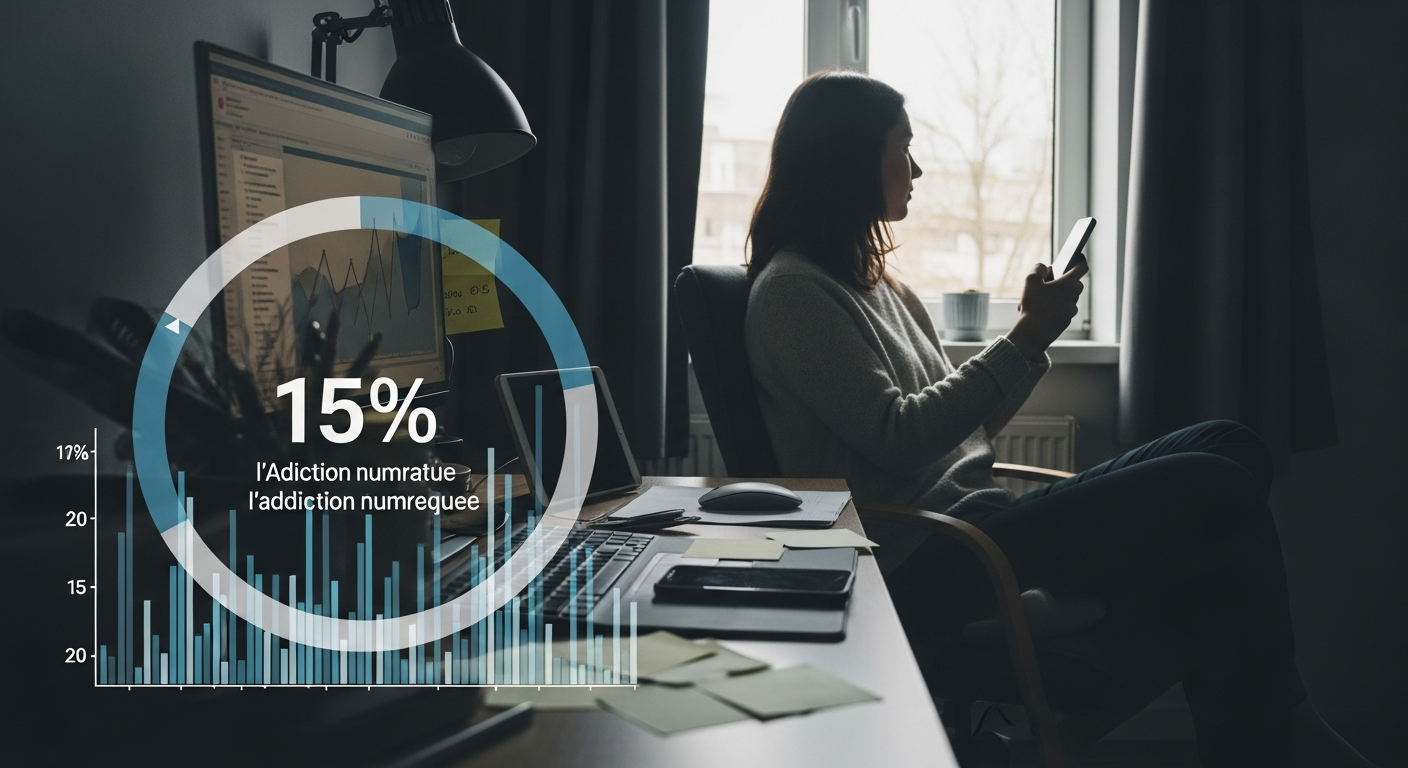
I asked her to set a timer for 15 minutes and just observe her phone use during that time. She was hesitant, but she did it. When the timer buzzed, she looked genuinely surprised, almost aghast. She’d unlocked her phone 37 times, opened six different apps, and spent 23 minutes on social media—all in a mere quarter-hour. This translated to unlocking her phone roughly every 24 seconds, a behavior pattern that’s become disturbingly common among heavy users. She felt a mix of guilt and profound relief. She finally fully acknowledged what she’d only vaguely considered: her phone was not just a massive time sink; it was actively controlling her mood and her precious time.
From there, we started with one deceptively simple boundary: no screens in the bedroom. It sounded basic, almost trivial, but for Sarah, it was utterly transformational. Research from the Sleep Foundation consistently shows that removing screens from bedrooms can improve sleep quality by up to 23% within just two weeks. We also agreed on a “tech-free zone” during meals and, critically, for the first hour after waking up. We then set a specific “bedtime” for her phone to turn off Wi-Fi at 11 p.m., and she reluctantly agreed to keep her phone in the living room overnight. She was deeply skeptical but desperate enough to try.
Try this and see the difference: Start with just one boundary tonight. Pick the easiest one that still feels meaningful to you.
The first week was, predictably, rough. She kept reaching for her phone in the mornings out of pure habit—what neuroscientists call “phantom vibration syndrome,” where the brain creates the sensation of notifications that aren’t actually there. She’d forget she’d turned off Wi-Fi, then get frustrated when her social media apps wouldn’t load. She’d leave her phone on her desk at work, then find herself checking it compulsively, almost unconsciously. We met twice a week, and each time she’d bring me her phone screenshots—her screen time reports, her notifications log, her app usage. It was embarrassing for her at first, but this tangible data helped her see her habits with stark clarity. As the saying goes, “what gets measured gets managed.”
What we learned early on, and what many people miss, is that phone addiction isn’t just about willpower. It’s fundamentally about design.
- Notifications are meticulously engineered to be addictive, triggering dopamine hits through what behavioral psychologists call "variable ratio reinforcement"—the same mechanism that makes slot machines so compelling.
- Social media apps utilize endless scrolls and immediate 'likes' to keep you hooked, leveraging psychological principles of variable reward.
- Games employ intricate reward systems and microtransactions to keep you playing indefinitely, often using techniques borrowed from casino psychology.
When she finally turned off all non-essential notifications and moved her most tempting social apps off her home screen, her usage dropped by almost 40% in the first week. She was genuinely surprised that not knowing immediately who commented or liked her post made her feel less anxious, not more. The constant feed of information often creates anxiety rather than alleviating it—a phenomenon researchers call “continuous partial attention,” which keeps our nervous systems in a perpetual state of low-level stress.
Insider secret: The most successful people I work with don’t just remove apps—they replace the habit. When Sarah felt the urge to scroll, she’d do five deep breaths instead. This simple pattern interrupt rewired her automatic responses within weeks.
The real breakthrough came when she started creating her own personalized rules.
- She set a firm boundary to check social media only during specific "social hours," limiting herself to a total of 30 minutes.
- She started using her phone's built-in "Focus Mode" to block work emails and Slack notifications after hours—a feature that 73% of smartphone users don't even know exists.
- She downloaded a meditation app and set her phone to silent during her commute and during work meetings.
- Slowly but surely, she rediscovered her beloved books, reconnected with her dog on longer walks, and began going for those walks without her phone.
One day, she texted me from her desk, her excitement palpable: “You’re not going to believe this. I just went 40 MINUTES without touching my phone! I completely forgot I was working on something. I actually got into a flow state.” That was the pivotal moment she realized that digital boundaries weren’t about punishment or deprivation—they were about freedom. She was finally reclaiming her time and, more importantly, her precious attention.
Game-changer alert: Flow states—those periods of deep, focused work—are nearly impossible to achieve when your phone is within arm’s reach. Even having it visible reduces cognitive performance by up to 10%, according to research from the University of Chicago.
By the end of six weeks, she’d cut her social media usage by a staggering 70%.
- She was sleeping more consistently, averaging 7-8 hours a night.
- She reported feeling happier, more present, and significantly less anxious.
- She said she felt "more like herself" again, a sentiment echoed by many who find this balance.
What I learned from Sarah wasn’t about some perfect, rigid protocol. It was about the profound power of small, intentional boundaries. It was about treating her phone not as an extension of herself or a benevolent friend, but as a sophisticated device that could be used intentionally or abused mindlessly. It was about reclaiming her mornings, her evenings, and her focused attention, one thoughtful boundary at a time.
The neuroscience behind this transformation is fascinating: when we reduce the constant dopamine hits from notifications and social media, our brains gradually reset their baseline dopamine levels. This process, called “dopamine fasting” by some researchers, allows us to find pleasure and motivation in simpler, more meaningful activities again—like reading, walking, or having uninterrupted conversations.
Here’s the essential takeaway: establishing healthy digital boundaries isn’t about banning phones or eliminating technology entirely. It’s about creating a flexible framework that empowers you to use your phone intentionally, preventing it from dictating your mood, consuming your time, or fracturing your relationships. It’s ultimately about reclaiming your attention and, by extension, your life.
What works: The most effective digital boundaries are specific, measurable, and tied to your values. Instead of “use phone less,” try “no phone during family dinner” or “check social media only at 2 PM and 7 PM.”
If you’re struggling with phone addiction, remember: you’re absolutely not alone. The average American now spends over 7 hours a day looking at screens, with nearly 3 hours dedicated to smartphones alone. And you certainly don’t have to do it alone. Start small.
- Turn off those non-essential notifications—this single action can reduce phone pickups by 25-40%.
- Create a simple tech-free zone.
- Track your usage for a few days to understand your baseline using your phone's built-in screen time features.
- Then, incrementally, start creating rules that genuinely work for you.
This story isn’t about achieving digital perfection overnight. It’s about sustainable progress, what behavioral scientists call “marginal gains”—small improvements that compound over time into significant life changes. And that progress is real, profoundly measurable, and unequivocally worth the effort. I’ve seen it happen with countless clients since Sarah—people who were overwhelmed by their phones, then learned to use them intentionally and without fear. They didn’t give up their devices; they simply changed their fundamental relationship with them. And that, truly, is the silent magic of healthy digital boundaries.
The ripple effects extend far beyond just screen time. When we reclaim our attention from our devices, we often
- rediscover forgotten hobbies,
- deepen our relationships,
- improve our sleep quality, and
- experience what researchers call "increased life satisfaction."
Frequently Asked Questions
Why is establishing healthy digital boundaries essential for phone addiction recovery?
Establishing healthy digital boundaries is absolutely crucial for phone addiction recovery because it directly addresses the core psychological mechanisms that make smartphones so powerfully addictive—constant notifications, infinite scrolling, and micro-interactions designed to perpetually capture attention. These features exploit what neuroscientists call the “dopamine reward pathway,” the same brain circuitry involved in substance addictions.
By creating intentional boundaries, such as turning off non-essential notifications, setting specific times for engaging with social media, and designating genuine tech-free zones, individuals can drastically reduce compulsive checking behaviors and regain significant control over their valuable attention. These boundaries aren’t just restrictive; they help normalize device use, prevent digital overwhelm, and create essential space for more meaningful, real-world activities, ultimately reducing reliance on the phone for mood regulation and entertainment.
Here’s what most people don’t realize: Research from the Center for Humane Technology shows that limiting social media to 30 minutes per day can significantly decrease feelings of anxiety and improve overall well-being within just two weeks. The key is that boundaries help reset your brain’s dopamine baseline, making you less dependent on digital stimulation for happiness and motivation.
It’s about re-architecting your digital environment to serve you, not control you. Think of boundaries not as restrictions, but as guardrails that keep you on the path toward your actual goals and values.
What are some highly effective ways to create digital boundaries that genuinely stick?
To create digital boundaries that truly stick, a multi-faceted approach is key. The most successful strategies I’ve seen combine environmental design with behavioral psychology:
- First, turn off all non-essential notifications to sever the constant interruption cycle and the dopamine-driven urge to check your phone—this is arguably the single most impactful step. Most people have 15-20 apps sending notifications, but only 2-3 are truly urgent. Be ruthless here.
- Second, establish specific "tech-free" times, such as during all meals and, crucially, the first hour after waking. This prevents what researchers call "morning cortisol spikes" caused by immediately flooding your brain with information and stimulation upon waking.
- Third, leverage your device's built-in features like "Screen Time" (iOS) or "Digital Wellbeing" (Android) to set daily usage limits for specif
7 Best Tips for Digital Wellness: A Complete Guide
ic apps and schedule automatic device downtime. These tools are surprisingly powerful when used consistently.Implementing even just two of these strategies, particularly turning off notifications and creating a ‘no-phone in bedroom’ rule, can reduce screen time by over 30% almost immediately.
How can I measure whether my digital boundaries are effective without feeling overwhelmed?
Measuring the effectiveness of your digital boundaries doesn’t have to be overwhelming; it’s about smart, incremental tracking that focuses on progress, not perfection. The key is establishing clear baseline metrics and tracking meaningful changes over time.
Start by establishing a baseline: For three days, track your average daily screen time, the total number of times you unlock your phone, and the time spent on your most problematic apps using built-in device tools (Screen Time on iOS, Digital Wellbeing on Android). Don’t judge these numbers—just observe them. Most people are shocked to discover they unlock their phones 80-150 times per day.
Then, after implementing your new boundaries—such as disabling non-essential notifications and defining specific social media times—track these exact same metrics again for another week. Look for measurable, even subtle, changes: a 20-30% reduction in daily screen time or a 15-minute decrease in average unlocking frequency indicates significant progress.
Focus on these key metrics:
- Daily screen time (aim for gradual reduction)
- Number of phone unlocks (fewer interruptions = better focus)
- Time spent on problematic apps (social media, games, news)
- Sleep quality (many people see improvement within days)
- Mood and anxiety levels (subjective but important)
What works: Use a simple weekly check-in. Every Sunday, review your screen time report and ask yourself: “Did I feel more in control of my phone this week?” The goal isn’t perfection, but consistent improvement.
The most important metric isn’t what you measure on your phone—it’s what you gain back in your life. Are you reading more? Having better conversations? Sleeping better? These qualitative improvements often matter more than the quantitative data.
Consistent, small reductions in screen time are far more sustainable and impactful than drastic, unsustainable cuts.
Can digital boundaries significantly improve my mental health and overall well-being?
Yes, absolutely. Digital boundaries have been shown to significantly improve mental health and overall well-being, a finding increasingly supported by robust research from institutions like Stanford’s Digital Wellness Lab and the University of Pennsylvania’s psychology department.
Excessive screen time, particularly on social media, is strongly correlated with increased anxiety, symptoms of depression, heightened feelings of loneliness, and significant sleep disturbances. The mechanisms are well-understood: constant comparison with others’ curated lives, dopamine dysregulation from endless scrolling, and chronic partial attention that keeps our nervous systems in a state of low-level stress.
By purposefully establishing boundaries—such as limiting social media to specific, intentional times, systematically turning off distracting notifications, and creating dedicated tech-free zones—you can dramatically reduce these pervasive negative effects.
The research is compelling: Studies consistently show that people who limit social media use to 30 minutes per day experience measurable reductions in loneliness and depression within just a few weeks. The University of Pennsylvania found that participants who limited social media use showed significant improvements in well-being and reduced FOMO (fear of missing out).
Here’s what happens neurologically: When you reduce constant digital stimulation, your brain’s dopamine receptors become more sensitive again. This means you can find pleasure and satisfaction in simpler activities—a good conversation, a walk in nature, reading a book. You’re essentially resetting your brain’s reward system.
Furthermore, reducing digital distractions during important real-life moments naturally enhances present-moment awareness, deepens real-life relationships, and fosters a greater sense of calm and control. Many of my clients report feeling “more like themselves” again after establishing consistent digital boundaries.
The sleep benefits alone are transformative: Removing screens from bedrooms and avoiding them for an hour before bed can improve sleep quality by 20-30%, which has cascading effects on mood, cognitive function, and overall health.
Reclaiming your attention is, in essence, reclaiming your peace of mind. When you’re not constantly reacting to notifications and digital demands, you create space for intentional living, deeper relationships, and activities that align with your actual values and goals.
What are the most common mistakes people make when establishing digital boundaries?
When establishing digital boundaries, people frequently fall into several predictable pitfalls that derail their efforts. Understanding these mistakes can help you avoid them and create boundaries that actually stick.
- **The biggest mistake is setting overly restrictive boundaries that are simply impossible to maintain long-term**. I see people try to go from 6 hours of daily screen time to 1 hour overnight, or attempt to eliminate social media entirely when it's their primary way of staying connected with friends. This all-or-nothing approach leads to rapid frustration, a sense of failure, and ultimately, abandonment of the effort. **Sustainable change happens gradually**.
- **Another significant error is focusing solely on the phone itself without addressing the deeper underlying emotional triggers**—like boredom, loneliness, stress, anxiety, or FOMO—that often drive excessive usage. Your phone is often a symptom, not the root cause. If you don't develop alternative coping strategies for these emotions, you'll likely return to old patterns during stressful periods.
- **Many people also frame digital boundaries as punishment rather than empowerment**. They see boundaries as deprivation instead of liberation, which creates internal resistance. The most successful approach is to focus on what you're gaining—better sleep, deeper relationships, improved focus—rather than what you're giving up.
- **Neglecting to involve significant others or family members** in the boundary-setting process can also lead to conflicts or unsustainable expectations. If your partner is used to texting you throughout the day and you suddenly stop responding during work hours, communication about your new boundaries is essential.
- **Another common mistake is trying to rely purely on willpower** instead of changing your environment. Willpower is finite and unreliable. Instead, use "environmental design"—remove tempting apps from your home screen, turn off notifications, create physical barriers. Make the right choice the easy choice.
- **Finally, failing to track progress or acknowledge improvements** prevents people from seeing their success, making it difficult to stay motivated or adjust boundaries as needed. Small wins compound into significant changes, but only if you notice and celebrate them.
Game-changer insight: The most successful people I work with treat digital boundaries like any other important life skill—they expect a learning curve, they adjust their approach based on what works, and they focus on progress over perfection.
Sustainable digital wellness requires realistic goals, self-awareness of emotional triggers, environmental design, and consistent positive reinforcement. Start small, be patient with yourself, and remember that every small step toward healthier phone use is a victory worth celebrating.