8 Tips to Boost Your Digital Wellness Now
I was working with a young client—let's call her Lauren—who had been making excellent progress after her initial assessment and a tailored recovery plan. She'd set clear boundaries, and her CBD lifestyle was a game-changer for managing daily anxieties. But then, seemingly out of nowhere, she started backsliding. Her screen time crept up, sleep quality declined, and her anxiety spiked. It was frustrating because we'd been so careful about our initial approach. What's interesting is, it was only then I realized we needed to look at our plan through a more dynamic lens. This meant focusing not just on "triggers," but on specific "**risk signals**" and the nuanced stressors she'd been experiencing in real-time.
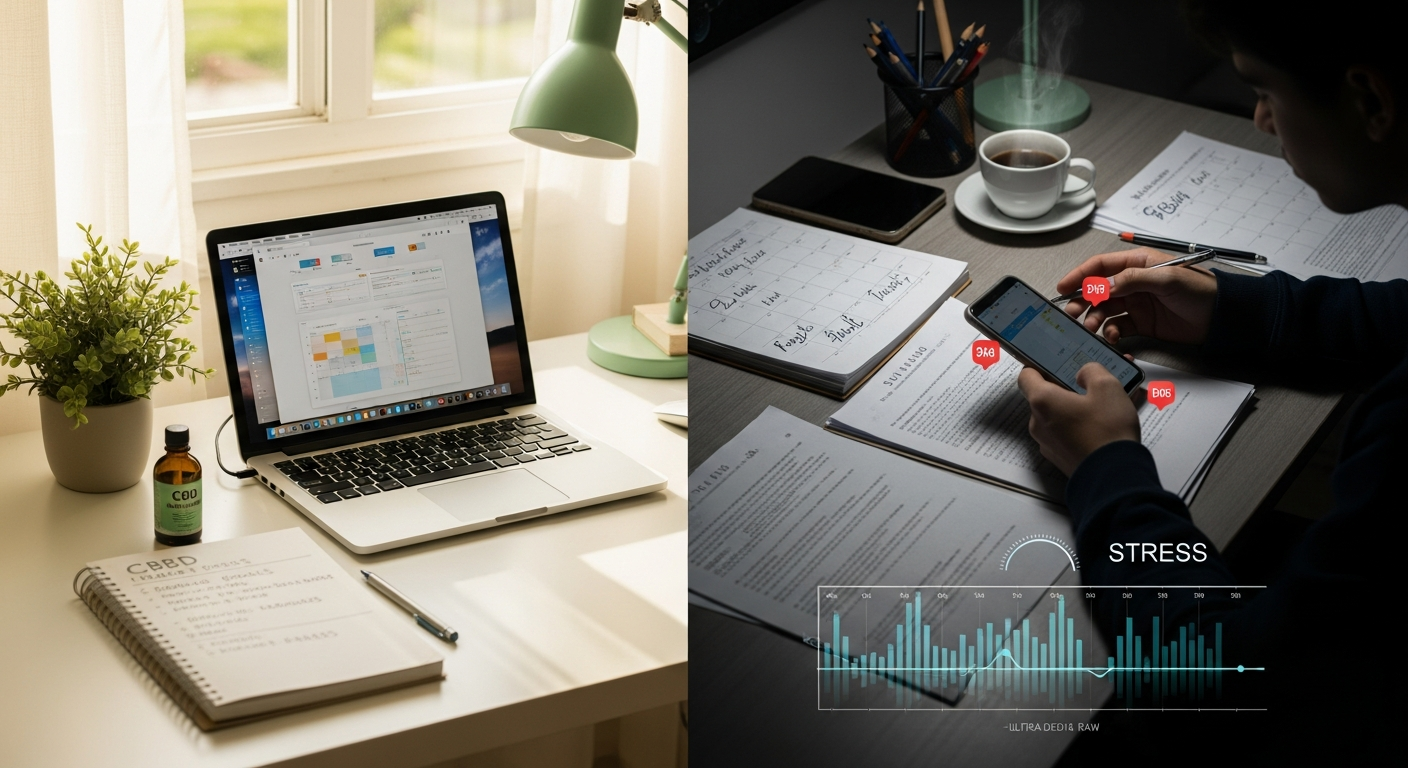
The turning point was a frank conversation I had with her mother, who pointed out that Lauren's workload at college—she's a senior—had become more intense than ever. She was under immense pressure to secure internships, maintain her GPA, and navigate the usual social complexities. It was, quite frankly, a perfect storm for relapse if we weren't proactive. That was a lightbulb moment for me: sometimes, the stressors that trigger relapse aren't immediately obvious. They can be subtle, cumulative, and can sneak up on even the most diligently crafted recovery plans. For more details, see our guide on The 7 Overlooked Mistakes Sabotaging Long-Term Digital Wellness & Phone Addiction Recovery.
Here's what most people don't realize: **stress doesn't announce itself with a megaphone**. It creeps in through the back door—an extra assignment here, a social conflict there, financial pressure mounting slowly. Research from the American Psychological Association consistently shows that chronic, low-level stress is often more damaging than acute stress. This is because we don't recognize it until it's already rewired our coping mechanisms. For more details, see our guide on Why is Cognitive Behavioral Therapy the foundation for phone addiction treatment?.
Trigger warning: A colleague, who is a licensed clinical social worker and someone I deeply respect, shared a story that brought me to tears. Let's call her "Sarah." Sarah works with adolescents and young adults, and she told me about a student who relapsed after a major breakup. The student had been doing incredibly well with her recovery plan—strict phone limits, no social media after 9 pm, weekly check-ins. But after the breakup, she started scrolling through old messages, obsessively checking the ex's Instagram stories, and her screen time skyrocketed. Sarah had to step in quickly to prevent a full-blown relapse.
It was heartbreaking because the original plan had been so effective, but the nature of the stressor had changed the game entirely. It made me realize that our plans have to be flexible enough to adapt to life's inevitable, often unpredictable, stressors. For more details, see our guide on Why This Guide Exists and What Makes It Different.
Lauren's case was different: her relapse was more subtle, but equally nuanced and, in some ways, more insidious. She'd tell me she was just "unsupervised for a few minutes" but then she'd be on her phone for hours. She'd start missing deadlines, and her sleep schedule would get wonky. The thing is, she didn't realize she was slipping back into old habits because she genuinely felt like she was "just relaxing." That's a common, frustrating trap we all fall into: we conflate genuine relaxation with mindless scrolling, and then wonder why our **digital wellness** isn't holding up. It's a powerful distinction to make, and one that's crucial for long-term recovery.
**The neuroscience behind this is fascinating**: when we're stressed, our prefrontal cortex—the part responsible for decision-making and impulse control—literally goes offline. Meanwhile, our limbic system, which craves immediate gratification, takes the wheel. This is why even the most well-intentioned people find themselves doom-scrolling at 2 AM during stressful periods.
<H2gnize it as a “real” threat.
Key Takeaway: Always probe deeper than surface-level triggers. Keep a sharp eye out for nuanced changes in behavior. These include unexplained dips in productivity, persistent missed deadlines, or sudden shifts in sleep patterns. Such changes are often early warning signs of escalating stress and potential digital fallback.
Try this and see the difference: Start a “stress detective” journal. For one week, note every time you reach for your phone and what happened in the 10 minutes before. You’ll be amazed at the patterns that emerge.
Harness the Power of Data: Inform Decisions, Don’t
Harness the Power of Data: Inform Decisions, Don’t
8 Tips to Optimize your Digital Wellness
Understand and Measure Your Digital Usage
Guess
The Insight: Intuition is valuable, but objective data provides irrefutable clarity. Tracking stress levels and mood alongside phone use offers powerful, actionable insights.
The game-changer: Most people track screen time but ignore the emotional context. It's like tracking calories without considering nutrition—you're missing the most important part of the equation.
Key Takeaway: Implement simple, consistent tracking (e.g., mood journals, stress scales) to identify precise patterns. This data will illuminate the direct correlation between stress spikes and increased digital engagement, enabling you to make highly targeted and effective adjustments to any recovery plan.
What works: Use a simple three-column approach:
- Time
- Trigger
- Response
Adaptive Strategies for Sustainable Digital Wellness
3. Build Agility: Design Flexibility into Every Plan
The Insight: No recovery plan can be a rigid, one-size-fits-all solution. Life is dynamic, and plans must be too.
The insider secret: The most successful digital wellness plans I've implemented have three distinct "modes":
- Normal
- High-Stress
- Recovery
Key Takeaway: Incorporate "if-then" scenarios and create structured flexibility for high-stress periods. This approach provides essential guardrails while still acknowledging individual needs and the fluctuating demands of daily life, preventing frustration and feelings of failure during inevitable slip-ups.
Try this: Create your own "Digital Weather System"—just like you dress differently for rain versus sunshine, your digital habits should adapt to your life's current conditions.
4. Expand the Circle: Actively Involve the Family
The Insight: Recovery isn't an isolated journey. Family members can be powerful allies, offering both support and crucial contextual information.
What most families get wrong: They focus on policing behavior rather than understanding the underlying needs that digital devices are meeting. When family members become partners in problem-solving rather than enforcers of rules, compliance skyrockets.
Key Takeaway: Engage family members early and empower them as informed partners, not just overseers. They can provide invaluable real-time support, reinforce boundaries, and help identify subtle stressors or triggers that might otherwise be missed, significantly improving outcomes.
The breakthrough approach: Hold weekly "digital wellness family meetings" where everyone shares their challenges and successes. This creates accountability without shame.
6. Prevention Over Reaction: Start with Stressors, Not Just Symptoms
The Insight: Focusing solely on reducing screen time without addressing underlying stressors is akin to treating a symptom without curing the disease.
The pattern most people miss: They try to white-knuckle their way through digital detoxes without addressing why they're reaching for their devices in the first place. It's like trying to stop coughing without treating the cold.
Key Takeaway: From the outset, prioritize identifying and proactively planning for stressors rather than merely reacting to excessive phone use. This anticipatory approach helps intercept potential relapses far earlier and fosters a more sustainable, preventive mindset.
What works: Create a "Stress Calendar" where you mark predictable high-stress periods (deadlines, social events, family gatherings) and pre-plan your digital wellness strategies for those times.
7. Consistent Touchpoints: Implement Micro Daily Check-Ins
The Insight: Infrequent check-ins can miss critical shifts. Small, consistent engagements provide a continuous feedback loop.
The micro-habit that changes everything: A 2-minute daily check-in is infinitely more valuable than a 2-hour weekly session. Consistency trumps intensity every time when it comes to behavioral change.
Key Takeaway: During high-stress periods, incorporate brief, focused daily check-ins (even just 5-10 minutes). These consistent touchpoints provide ongoing support, immediate accountability, and allow for swift identification of early warning signs, preventing minor slips from becoming major setbacks.
Try this: Set a daily phone alarm for the same time each day with the message "How's my digital wellness today?" Answer in one sentence. That's it.
Integrate Digital Wellness into a Holistic Approach
5. Go Holistic: Prioritize Overall Wellness
The Insight: Digital wellness is deeply intertwined with physical and mental health. Neglecting one impacts the other.
Here's what the research shows: Poor sleep quality increases impulsive behavior by up to 50%. When you're tired, your brain literally can't make good decisions about digital boundaries. It's not a willpower issue—it's a biological one.
Key Takeaway: Make improving sleep quality, balanced nutrition, and regular physical activity non-negotiable pillars of the recovery plan. These foundational factors significantly strengthen resilience, reduce overall stress, and decrease susceptibility to compulsive digital behaviors.
Try this immediately: Before implementing any digital restrictions, spend one week focusing solely on getting 7-8 hours of quality sleep. You'll be shocked at how much easier digital boundaries become.
8. Embrace the Journey: Cultivate Resilience as the Goal
The Insight: Recovery is an ongoing process of learning and adaptation, not a fixed destination.
The mindset shift that changes everything: Stop measuring success by perfect adherence to rules and start measuring it by how quickly you bounce back from setbacks. Resilience, not perfection, is the true marker of digital wellness mastery.
Key Takeaway: Reframe setbacks not as failures, but as opportunities to refine the plan and build resilience. The ultimate goal is to equip individuals with the skills to handle life's inevitable stressors without defaulting to compulsive digital behaviors, fostering long-term self-efficacy.
The question that transforms everything: Instead of asking "How can I never use my phone excessively again?" ask "How can I recover more quickly when I do slip up?" This single shift in perspective changes everything.
The experience with Lauren has fundamentally transformed my approach to digital wellness and recovery. It's reinforced my conviction that truly effective recovery plans must be dynamic, deeply responsive, and holistic.
They should meticulously consider an individual's behaviors and specific digital triggers. Furthermore, they must account for the broader, intricate context of their lives. This includes their stressors, their relationships, their overall health, and their unique coping styles. And most importantly, these plans should be meticulously designed to help individuals cultivate resilience—the profound ability to navigate life's inevitable stressors without turning to compulsive phone use as a primary escape.
The truth that no one talks about: Digital wellness isn't about having perfect boundaries—it's about having flexible, adaptive strategies that work in the real world, with real stressors, and real human limitations.
It's not always easy, and there will undeniably be setbacks along the way. But with the right support, the right adaptable plan, and the right resilient mindset, sustainable recovery is absolutely achievable. And the rewards—improved mental health, richer relationships, greater focus, and enhanced productivity—are, in my strong opinion, more than worth every single effort. If Lauren's story teaches us anything, it's that recovery is profoundly possible and that the most effective plans are always the ones that humbly adapt to life's complex realities, rather than attempt to ignore them.
Your next step: Choose one insight from this list and implement it this week. Don't try to overhaul everything at once—sustainable change happens one small, consistent step at a time. The journey to digital wellness isn't a sprint; it's a marathon where the goal is to keep moving forward, no matter how slowly.